

1. Choose your regulator and trust model
Open Settings → Trust Accounting (or the Settings tab on the Trust Accounting home screen).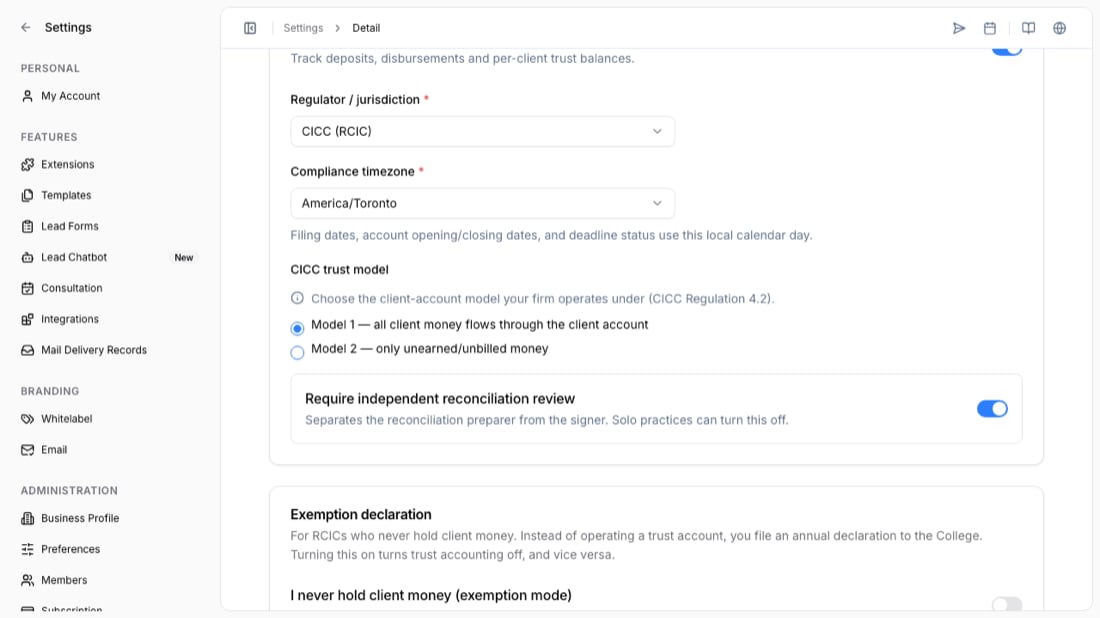
- Turn on Enable trust accounting.
- Set your Regulator / jurisdiction — for immigration consultants this is CICC (RCIC).
- Set your Compliance timezone. Filing dates, account opening/closing dates, and deadline status all use this local calendar day.
- For CICC firms, choose your trust model:
- Model 1 — all client money flows through the client (trust) account.
- Model 2 — only unearned / unbilled money goes into the trust account; earned-and-billed money must not.
- Choose whether to require independent reconciliation review (the person who signs a month-end check must differ from the person who prepared it). Solo practices can turn this off.
- Save Settings.
2. Open the trust account
An account is the record of your real trust bank account. Open one from the Trust Accounting home screen. For a CICC account you’ll provide:- Account name and type — pooled (shared across clients) or separate (opened for one named client).
- Bank identity — bank name, address, and a masked account number (all but the last 3–4 digits hidden). A full account number is not accepted.
- Opened date — the real date the bank account was opened (it can’t default to today).
- Three CICC attestations — account title, institution eligibility, and no-lien.
The attestations are your confirmations as the licensee. VisaFlo does not inspect bank records or run a lien search, so never treat them as an external verification.
What comes next
Once your account shows on the home screen with a balance, you’re ready to record a deposit.Troubleshooting
- “CICC deposit classification required” or “received date required” later on — these come from the trust rules, not a bug. See Record a deposit.
- Can’t change the model — it locked on the first client-money receipt for the audit year. A new audit year gets a fresh election.
- Can’t close an account — the balance, firm funds, and any reserved funds must all be zero, and there must be no transactions or reconciliations dated after the close date.