

The boundary between a lead, client, and case
Use a lead for a prospective relationship. Use a client when your firm has an ongoing relationship with that person or organization. Use a case for a specific immigration matter that needs its own information, documents, deadlines, and delivery workflow. This distinction matters: a lead form is designed to help you decide whether and how to engage. A case questionnaire is designed to collect the structured facts needed to work an active matter. Do not create a detailed case simply to hold an early enquiry. Read Core Concepts for the full model.Choose an intake path
Build a useful lead form
Ask only for the information that changes the next action. A strong first version usually includes contact details, the immigration objective, location or status context, timing, and how the prospect heard about your firm. Avoid using a lead form to recreate a full case questionnaire; long forms reduce completion and create details your team has not yet committed to managing. Use Custom Lead Form to build the form and Collect Leads to work the incoming queue.Run the consultation handoff
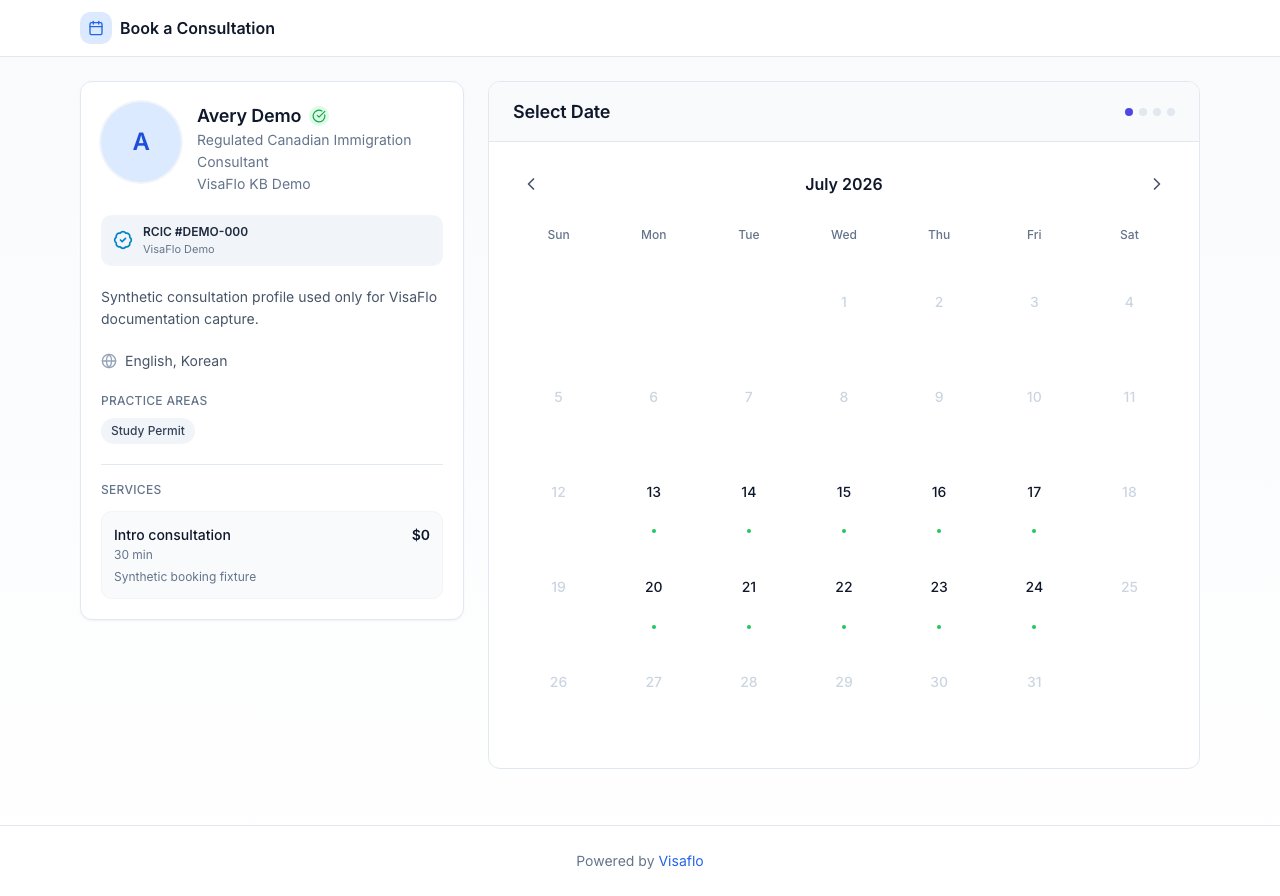
Before a consultation, confirm the lead owner, the purpose of the meeting, and the question that must be answered next. After it, record one clear outcome: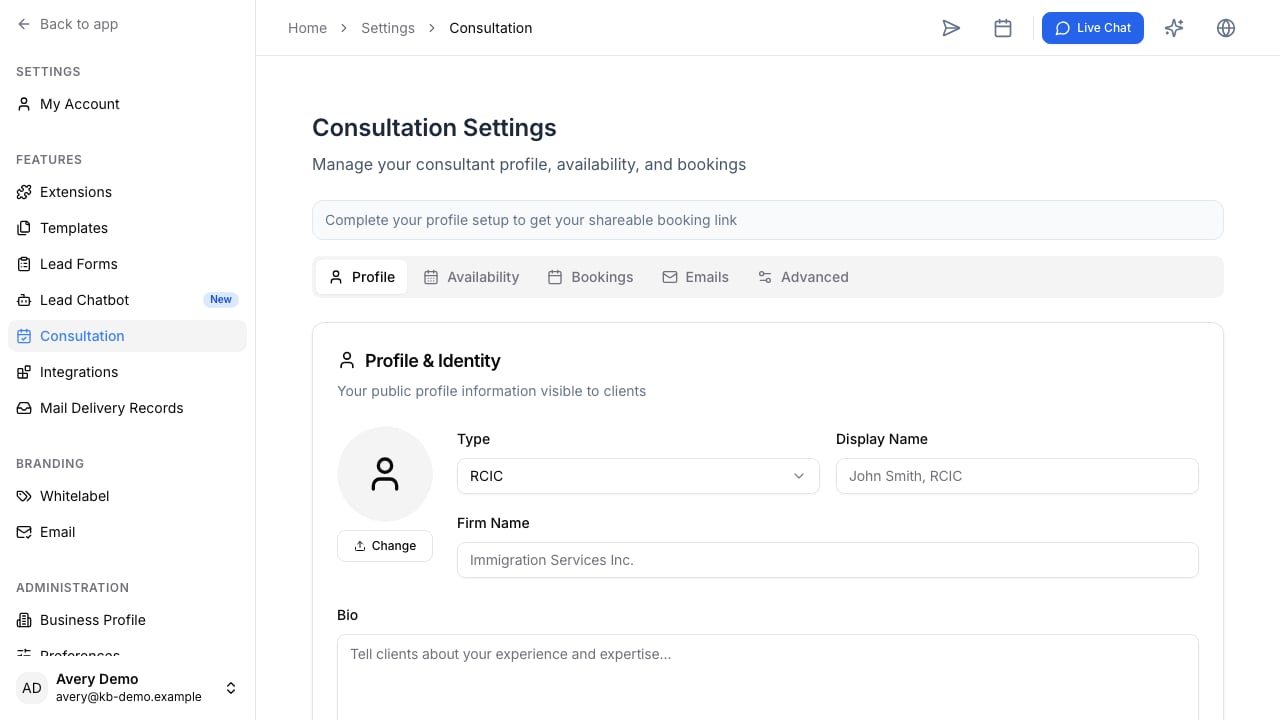
- Continue qualification.
- Request additional information.
- Send an engagement or payment step.
- Convert to a client and create a case.
- Close the lead with a reason your team can understand later.